



Hoverboards remain an entertaining form of personal transportation for recreational riders, offering a fun, low-effort way to get around a neighborhood, park, or smooth indoor space. However, safety should be your first priority when shopping for one, both in terms of the device’s build quality and battery safety, and in terms of choosing the right type for your own riding experience and the terrain you’ll actually be using it on.
Table Of Content
Hoverboards use self-balancing technology, with internal gyroscopes and sensors that detect your weight distribution and adjust the wheels accordingly to keep you upright as you lean forward, backward, or turn. This makes them relatively intuitive to learn, though first-time riders should still expect a short adjustment period before they feel fully comfortable.
What Type Should You Buy?
Beginner Hoverboards
Beginner-oriented models are built around manageable top speeds and straightforward, predictable controls, which makes the learning curve considerably gentler for someone who has never ridden a self-balancing device before. Best for: First-time users
Off-Road Hoverboards
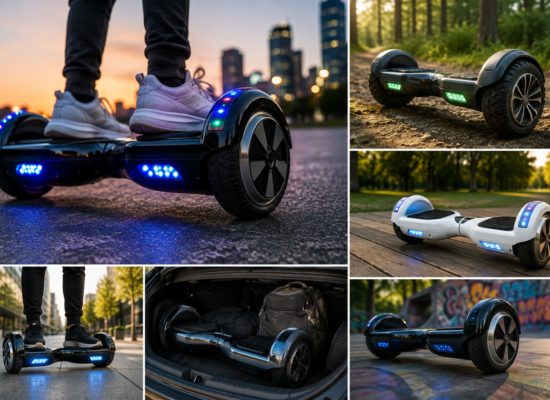
Off-road models typically feature larger, more rugged tires and a more robust overall construction, making them better suited to grass, gravel, and other uneven surfaces that would cause a standard hoverboard to struggle or lose traction. Best for: Outdoor riding
Hoverboards With Bluetooth
Some models incorporate built-in speakers and smartphone-connected features, adding an entertainment element that can make casual, recreational riding around a driveway or park more enjoyable, particularly for younger riders. Best for: Recreational use
Important Buying Factors
- Rider weight: check the manufacturer’s specified weight range, since exceeding it can affect both performance and safety.
- Wheel size: larger wheels generally handle uneven surfaces and small obstacles better than smaller ones.
- Battery quality: this is one of the most important safety considerations, discussed further below.
- Charging time: varies significantly between models and affects how quickly you can get back to riding.
- Maximum speed: beginners should generally start with a lower top speed until they’re comfortable with the controls.
- Construction: sturdier materials generally hold up better to regular use and occasional bumps.
- Lighting: built-in LED lights improve visibility if you’ll be riding in low light.
- Safety certification: discussed in detail below, and arguably the single most important factor.
- Warranty: a solid warranty is often a good indicator that the manufacturer stands behind the battery and build quality.
Do not purchase an unfamiliar or unbranded product simply because it is dramatically cheaper than better-known alternatives. Battery-powered personal mobility devices require extra attention to charging practices and battery safety, since a poorly made battery pack presents a genuine fire risk in a way that most other consumer electronics simply don’t.
Specifically, look for hoverboards that carry UL 2272 certification (or the equivalent safety certification relevant to your country), which indicates the device has been independently tested for electrical and fire safety standards covering the battery, charging system, and overall construction.
Final Verdict
For a first hoverboard, prioritize construction quality and safety certification rather than chasing maximum speed, since a beginner rider gets little practical benefit from extra speed but faces real risk from a poorly built battery system.
Choose a reputable, well-reviewed manufacturer and confirm current safety certification before purchasing, and consider starting with a beginner-oriented model even if you’re confident in your balance, simply to get comfortable with how the device responds before pushing for higher speeds.

No Comment! Be the first one.